Why solar panels are placed tilted?
Why solar panels are placed tilted?
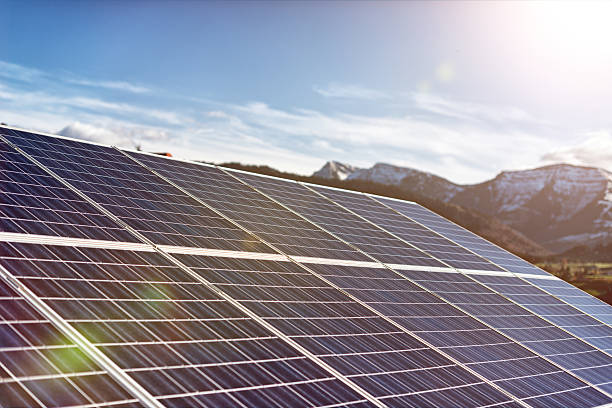
Everyone may find that most solar panels around us are placed diagonally. Whether it is on the roof or the street lights, there is a certain inclination angle. The inclination angle of the solar panel is related to the local geographical location and latitude. Below, Findy Solar, the customized solar panels manufacturer will answer why the solar panel should be inclined.
The reason for the oblique placement of solar panels
Solar panels mainly convert solar radiation into electrical energy directly or indirectly through the photoelectric or photochemical effect by absorbing sunlight. That is to say, the more solar radiation the solar panel receives, the more electricity it can convert. Therefore, the output power of solar modules depends on factors such as solar irradiance and solar cell temperature.
Some countries are located in the northern hemisphere, and most of them have higher latitudes. The angle of sunlight exposure is oblique. Only by placing the solar panel obliquely in the opposite direction can the light-receiving surface of the panel be as perpendicular to the sunlight as possible so that the solar panel can exert a higher efficiency. At present, there are also fully automatic solar panels, which can allow the panels to continuously adjust the horizontal angle with the change of the sun's irradiation angle so that the panels are perpendicular to the sun from morning to night.
The sun exposure is generally better between 10:00 in the morning and 3:00 in the afternoon, so the solar panels are inclined to the southeast as much as possible, and the inclination angle is 30°~60°. As long as it is within ±20° of due south, it will not impact the power generation. If conditions permit, it should be within 20° of the southwest as far as possible, so that the peak of solar power generation occurs sometime afternoon. It is beneficial to generate more electricity in winter.

Solar Panel Tilt Angle Calculation
Azimuth calculation
The azimuth angle of the solar panel square array is the angle between the vertical plane of the square array and the positive south direction (the eastward deviation is set as a negative angle, and the westward deviation is set as a positive angle). In general, when the square array faces due south (that is, the angle between the vertical plane of the square array and due south is 0°), the solar cell generates a large amount of electricity. When deviating from due south (northern hemisphere) by 30°, the power generation of the phalanx will be reduced by about 10%~15%. When it deviates from due south (northern hemisphere) by 60°, the power generation of the phalanx will be reduced by about 20%~30%.
In a clear summer, the moment when the solar radiation energy is considerable is late noon, so when the orientation of the phalanx is slightly westward, a large power generation can be obtained in the afternoon. In different seasons, the orientation of the solar cell array is slightly east or west - some have times when the power generation is significant.
If you want to adjust the azimuth angle to be consistent with the peak time of load in a day and the peak time of power generation, please refer to the following formula: Azimuth = (peak time of load in a day (24-hour system)-12)x15+(longitude- 116) In different seasons, the peak insolation time in each direction is different.
Inclination angle calculation
The inclination angle is the angle between the plane of the solar cell array and the horizontal ground. It is hoped that this angle is the inclination angle of the square array when the power generation is significant in one year. The inclination angle in a year is related to the local geographic latitude. When the altitude is higher, the corresponding inclination angle is also larger. However, like the azimuth angle, constraints such as the inclination angle of the roof and the inclination angle of the snow falling (slope greater than 50%-60%) should also be considered in the design.
For due south (azimuth angle of 0°), when the inclination angle gradually transitions from the horizontal (inclination angle of 0°) to the inclination angle, the insolation increases continuously until a significant value. It then increases the inclination angle, and the insolation continues to increase. Reduce. Especially after the inclination angle is more significant than 50°~60°, insolation drops sharply until the power generation drops to a small amount when placed vertically. For the case where the azimuth angle is not 0°, the insolation value on the inclined plane is generally low, and the insolation value is near the inclination angle close to the horizontal plane.
Shadow area effect
Suppose the solar panel cannot be directly illuminated by sunlight. In that case, only scattered light is used to generate electricity, and the power generation is about 10%~20% less than that without shadows. In this case, we need to correct the theoretical calculation value. Usually, when there are objects such as buildings and mountains around the phalanx after the sun comes out, there will be shadows around the buildings and mountains, so you should avoid shadows when choosing the place to lay the phalanx. If it is impossible to avoid it, it should also be solved from the wiring method of the solar panel so that the influence of the shadow on the power generation is reduced.
In addition, if the square arrays are placed in front of and behind, and the distance between the rear square array and the front square array is close, the shadow of the front square array will affect the power generation of the rear square array. When the altitude is higher, the distance between the square arrays will increase, and the area of the setting place will also increase accordingly. For the square matrix with anti-snow measures, the inclination angle is large, so the height of the square matrix is increased. To avoid shadows, the distance between the squares is also increased accordingly.


评论
发表评论