Why do solar panels crack?
Why do solar panels crack?
Under normal circumstances, the cracks of solar panels are not defects that can be directly found by the naked eye and need to be observed by detection methods such as EL imaging. Cracks will lead to a decrease in the power generation of the battery module, and even severe hot spot effects will affect the service life of the entire photovoltaic module. Let me introduce to you why customized solar panels are cracked.
Reasons for cracking of solar panels
1. Raw material shortcomings
The disadvantage of raw materials is the main factor for the cracking of components, and the quality of the raw materials of the cell directly affects the quality of the product. Cells are produced from silicon rods through growth, cutting, printing, sintering, and other processes. The purity of crystalline silicon is not enough. The curvature of crystalline silicon cells is too large, and the horizontal and vertical shortening rate of EVA material is too large, which will cause cracks in the production of battery components.
2. Production process error
In the production of battery components, sorting, single string welding, and lamination are required—framing, cleaning, curing testing, packaging, and other links. The use of incorrect processes in the production process will also cause cracks in the battery components. For example, when the welding heating plate temperature is too low during single welding, the welding temperature is too high, the welding speed is too slow, the lamination parameter setting is unreasonable, the vacuuming pressure is too high, and the vacuum is too fast, which will cause the components to crack.
3. Improper device settings
During the production process of battery components, the stringer, laminator, and framing machine directly exert force on the battery components. If the equipment output is improperly set or faulty, it will cause the battery components to crack. Suppose the soldering iron tip used in the single-string welding process is not handled in time after long-term use. In that case, the pit of the soldering iron tip will be uneven, resulting in uneven welding force, resulting in cracks in the battery components.
4. Human error
There are many hidden cracks caused by human factors in battery components, which occur in various links such as production, transportation, and equipment operation and maintenance. Although much automated equipment is used in production, manual transfer and fixation are still required in lamination, framing, and cleaning, and fingers are pressed during the transfer process.
The loading and unloading journey is not firm and constitutes a crack. During the cleaning process, other workers' equipment and non-standard operations will also cause cracks in the components, such as construction personnel stepping on the equipment on the components, operation and maintenance personnel standing on the components to sort out the components, and other non-standard operations.
5. Climate and environmental impact
In the process of using the battery module, due to the influence of the environment, it will also form the crack of the photovoltaic module. For example, the module trembles violently in a strong wind climate; the surface of the module receives uneven pressure from the snow after heavy snow; in a hail climate, the module is severely impacted by hail, etc., which may cause cracks.
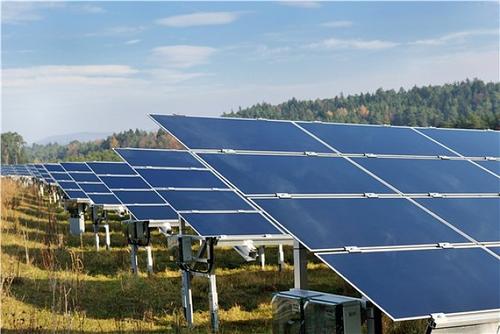
Methods to prevent cracks in solar panels
1. Strictly control the quality of incoming battery cells and reasonably select the interconnecting strips' thickness, hardness, and solderability.
2. Adhere to the relative humidity of the environment below 60%, and ensure that the cells are fully preheated before welding.
3. Welding should adhere to light, fast and flat gestures to prevent ineffective welding and excessive welding and prevent pressing the battery.
4. Machine welding should strictly monitor the welding quality to prevent invalid welding, excessive welding, and welding strip offset.
5. Pay attention to the EL inspection before lamination, and repair the cracks as much as possible to prevent the cracks from spreading due to lamination.
6. The laminated components should be thoroughly cooled before cutting the edge of the battery board. It is advisable to use cutting and framing with the glass side down.
7. Laminates before framing should be prevented from turning over and manual transfer.
8. The work surface, such as cutting and pre-group frame, should be large enough. After the components are placed in the center, the interval from the edge to the edge of the surface should be greater than 200mm.
9. When closing the junction box cover, the force should be moderate, and the corresponding position under the table should be set - a large area of support.
10. Steel-frame pallets or double-layer wooden pallets should rotate flat components. When using hydraulic trucks, the forks should completely pass through the pallets.
The above is an introduction to the causes of cracks in solar panels. Small-area cracks have little impact on battery components, but it does not mean that this problem can be ignored. Therefore, preventive work should be done to prevent problems.


评论
发表评论